
Foam Roller in Pilates: much more than just a massage roller
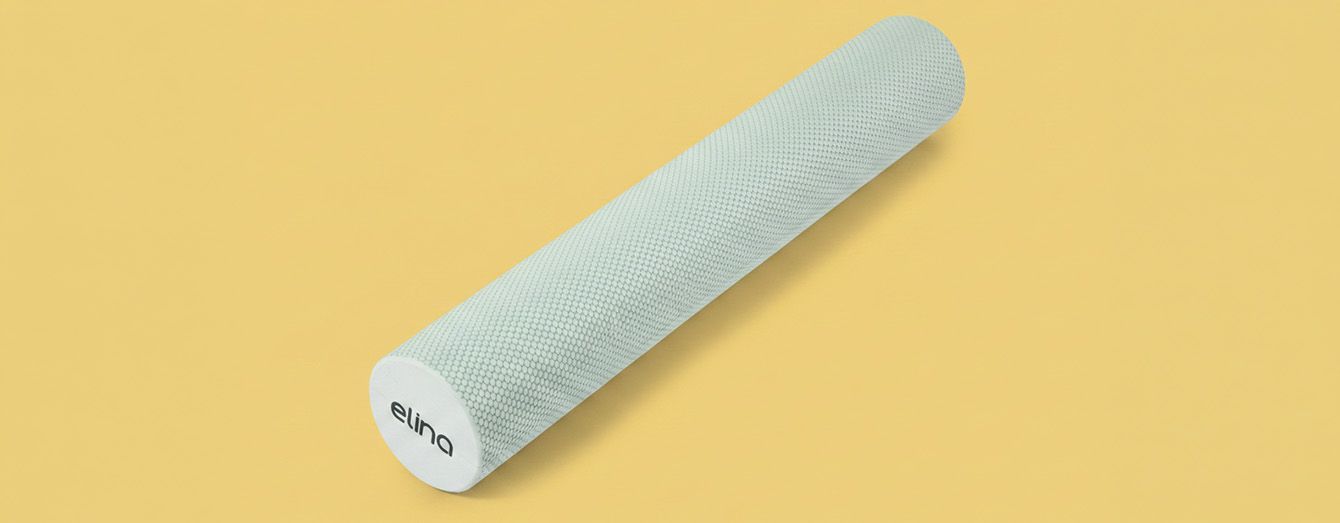
Foam Roller in Pilates: much more than a massage roller
If you have ever used a Foam Roller, it was probably at the end of a workout to relieve muscle tension or reduce stiffness. For years, this accessory has been associated almost exclusively with recovery and myofascial release.
But in Pilates, its role goes much further.
Its firm, rounded surface makes it a tool capable of transforming simple exercises into much more demanding movements, challenging balance, improving stability and forcing the body to work with greater control and precision.
Precisely because of that versatility, the Foam Roller has become one of the favorite accessories of many Pilates instructors. Whether you practice on the mat or you usually train with machines, you will discover that this simple foam cylinder can bring a completely new dimension to your training.
Why use a Foam Roller in Pilates?
In Pilates, each exercise has a specific goal. It's not just about moving the body, but doing it with control, concentration and precision.
The Foam Roller enhances precisely those principles.
By introducing a slightly unstable surface, the body needs to make small constant adjustments to maintain balance. That automatic response activates the stabilizing musculature, improves coordination and increases body awareness.
In addition, it forces you to pay more attention to posture, alignment and breathing, turning seemingly simple exercises into a completely different challenge.
It's surprising how a small change in the support point can completely change the feeling of a movement.
A different way to experience sensations similar to the Reformer
One of the most interesting aspects of the Foam Roller is that, in certain exercises, it can remind you of some of the sensations we find when working with a Pilates Reformer.
Although it doesn't replace the experience of training with a machine, the movement of the roller introduces a dynamic component that forces the body to stabilize constantly.
As happens with the Reformer’s sliding carriage, the goal is not only to complete the exercise, but to control each phase of the movement, maintain balance and engage the core throughout the range.
For this reason, many instructors incorporate the Foam Roller into their classes to prepare certain Reformer exercises or to transfer some of its principles to work on the mat.
It's an easy way to enrich practice and discover new sensations without the need to use a machine.
View this post on Instagram
An accessory that transforms classic Pilates exercises
One of the great advantages of the Foam Roller is that it can be incorporated into a wide variety of exercises, providing a new stimulus without changing the essence of the movement.
Bridge
Placing the Foam Roller under the soles of the feet during the Bridge increases instability and forces much greater engagement of the core and pelvic musculature to maintain alignment throughout the exercise.
Chest Lift
Performing a Chest Lift on the Foam Roller adds significant work for balance and stability, as well as promoting greater thoracic spine mobility.
Leg Circles
Placing the Foam Roller under the supporting leg during Leg Circles increases the challenge for the pelvis, forcing the body to maintain control while the leg performs the movement.
Spine Stretch Forward and Mermaid
These exercises take advantage of the roller as a mobile surface that facilitates the sliding of the hands, allowing an increased range of motion and achieving a smoother, more comfortable stretch.
Swan
Using the Foam Roller under the hands or forearms during Swan helps improve spinal mobility and promotes a more controlled extension.
As with many Pilates accessories, it's not about making exercises harder for the sake of being harder, but about discovering new ways to feel the movement and improving execution quality.
View this post on Instagram
Much more than balance
Although stability work is often the first benefit we notice when using a Foam Roller, its possibilities don't end there.
It's also an excellent ally to improve spinal mobility, increase flexibility and release tension accumulated after training.
Its curved surface allows the body to be mobilized gently, promoting chest opening, shoulder mobility and relaxation of areas that tend to accumulate tension, such as the back or the muscles of the legs.
In addition, many people use it to work the fascia, the connective tissue that surrounds muscles and joints, helping to recover a greater sense of freedom of movement.
That's why the Foam Roller is just as useful during a Pilates session as it is at the end of one.
An accessory for all levels with endless possibilities
You don't need experience to start using a Foam Roller.
Those new to Pilates can use it to improve body awareness, better understand core activation and develop greater control of movement.
As experience increases, that same accessory allows you to raise the difficulty of many exercises simply by changing the support point or introducing a new stability challenge.
That ability to adapt to any level makes the Foam Roller one of the most versatile accessories of the Pilates method. Some accessories serve a single function and others can completely transform a training session.
The Foam Roller undoubtedly belongs to the second group.
It can help you improve balance, strengthen the core, increase mobility, work coordination or discover new sensations in exercises you've been practicing for years.
As with other accessories of the Pilates method, such as the Magic Circle, a simple accessory is enough to challenge the body, perfect technique and keep progressing in practice.
Because in Pilates, the difference is not always in doing more exercises, but in finding new ways to feel each movement.