
How to Breathe in Pilates: A Guide to Connecting Body and Movement
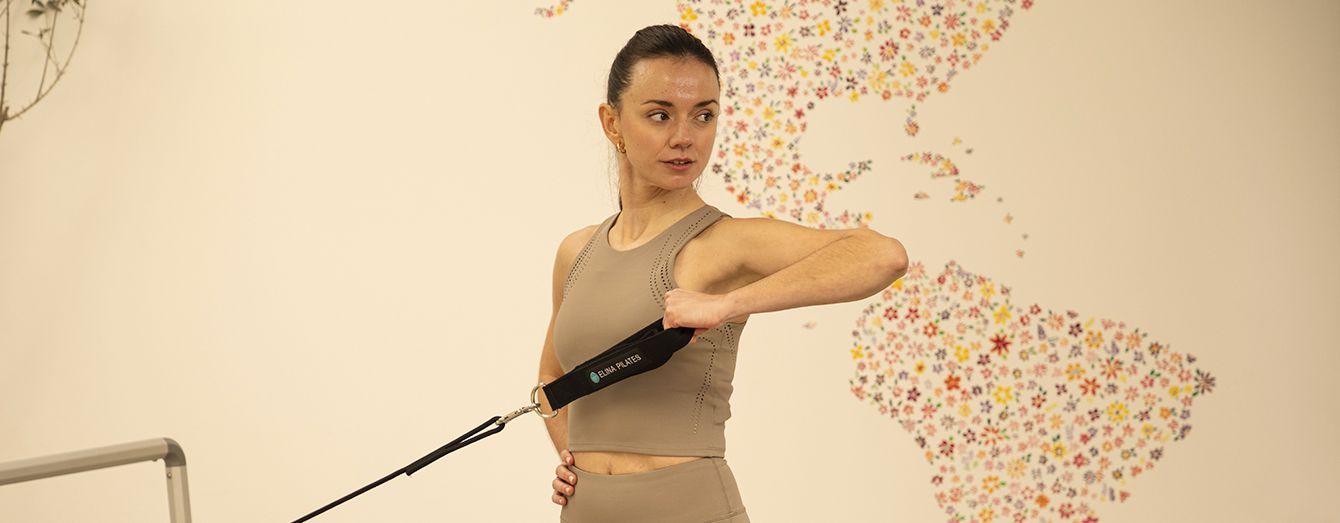
How to breathe in Pilates: the guide to connecting body and movement
Learning how to breathe in Pilates can make a world of difference in your practice. Although we breathe automatically every day, breathing in Pilates has a very specific purpose: to help the body move with greater control, stability, and awareness.
In fact, breathing is one of the six fundamental principles of the Pilates method, along with control, the center or core, precision, flow, and concentration. They all work together to achieve more efficient, conscious, and body-connected movements.
If you've ever wondered why your instructor insists so much on when to inhale or exhale, this article is for you.
Why is breathing so important in Pilates?
Breathing not only supplies oxygen to the body. In Pilates, it also helps activate the deep abdominal muscles, improve posture, and facilitate the execution of exercises.
Benefits of proper breathing in Pilates
- Increase trunk stability.
- Improve concentration during practice.
- Promote ribcage mobility.
- Reduce unnecessary tension in the neck and shoulders.
- Create a stronger mind-body connection.
For this reason, breathing correctly in Pilates is as important as performing each movement well.
How do you breathe in Pilates?
Unlike other methods, Pilates primarily uses what is known as lateral or ribcage breathing.
What is lateral or ribcage breathing?
Instead of directing air toward the abdomen, the goal is to expand the ribcage to the sides and toward the back of the body.
On inhalation, the ribs open gently, allowing the chest to expand. On exhalation, the ribs close again while the center of the body or core is activated.
This breathing pattern helps maintain abdominal stability during exercises and facilitates better body alignment.
Pilates breathing vs. abdominal breathing: how do they differ?
Abdominal breathing and Pilates breathing have different objectives.
Abdominal breathing seeks a state of relaxation, allowing the belly to expand with each inhalation.
In contrast, the lateral breathing used in Pilates aims to keep the center of the body stable while the ribcage expands. This technique enables greater control and support during movement.
It's not about one way of breathing being better or worse, but about using the type of breathing most appropriate for each situation.
How to practice Pilates breathing at home
Learning how to breathe in Pilates is easier than it seems. You can start with this exercise:
Exercise to learn to breathe in Pilates
- Sit or lie down comfortably and place your hands on your ribs.
- Inhale deeply trying to direct the air toward the sides of the chest. You should feel the ribs expand beneath your hands.
- Exhale slowly and feel the ribs come back together while the abdomen naturally activates.
Repeat this process several times without raising your shoulders or tensing your neck.
With practice, this type of breathing will become more natural and you will be able to apply it during your Pilates exercises.
Most common mistakes when breathing in Pilates
When starting to practice Pilates it is common to make some mistakes:
- Holding the breath during exertion.
- Raising the shoulders when inhaling.
- Breathing too quickly.
- Directing all the air only to the abdomen.
- Losing connection with the core.
The good news is that breathing can also be trained. With consistency and practice, it gradually becomes automatic.
Breathing and movement, a perfect combination
Each Pilates exercise has its own rhythm and breathing helps accompany it.
How to apply breathing in your Pilates exercises
In some movements you inhale to create space and lengthen the body. In others you exhale to promote stability, control, and core activation.
Therefore, learning how to breathe in Pilates is not only about taking air in and out, but about using breathing as a tool that improves movement quality and allows you to enjoy all the benefits of the method.
Next time you practice Pilates, pay attention to your breathing. You may discover that one of the method's greatest secrets has always been with you.